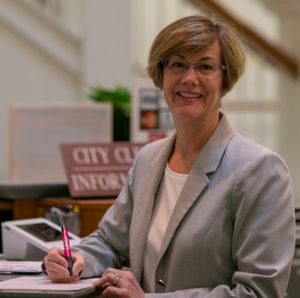
Kim Norton

  • Top Three Priorities

    Education. Assure that all Minnesota children are offered the opportunity to reach their full potential through a high quality public education system (P-16) - that is fairly and appropriately funded - so that they can compete in the global economy/marketplace and, ultimately, lead happy and productive lives.  A more complete statement about the direction we are moving in the area of restoring appropriate education funding is available on this website.
    Health Care. Every Minnesotan should be insured and have access to quality, affordable health care. The ability of small businesses to provide health insurance to their employees, long term care provider salaries/benefits, and the impact of continual cuts to hospitals are issues needing to be addressed this session. The legislature must monitor the recent health care reform efforts and be prepared to make appropriate adjustments as needed.
    Economy/Jobs. In addition to making certain we have an educated workforce through strong P-16 programs, we must strengthen the job climate (especially in the bioscience, technology, and entrepreneurial areas) and make Minnesota a desirable location for businesses to expand and develop by being competitive in the areas of taxes and incentives.  Living wage jobs and job skills training or re-training are needed and the state can support these through strong policy, bonding and other jobs focused legislation.
  • Education

    Minnesota schools are the engine of our state's economic future, and the key to success for all our citizens. For decades Minnesota has been a nation-leading, fairly funded model of excellence for public education in our country, giving Minnesota students access to some of the best education opportunities in the world. That tradition of academic excellence has gone far in sharpening the state's competitive edge with a well-educated, highly capable, modern workforce.

    But in recent years, Minnesota's school funding system has been eroding, and world-class education opportunities for students have been declining. Budget cuts in 2003, unfunded mandates from the federal government (including the flawed policies of "No Child Left Behind"), the rising cost of energy and health care, increasing enrollments in under-funded special education programs - coupled with ongoing disinvestments in our students - have presented schools with the incredible challenge of doing much more with far less.

    Inadequate state funding for education has shifted the burden onto property tax payers already struggling with record increases in their tax bills. Now, all too often, the quality of a student's education depends on each individual school district's ability to pass a levy referendum. Last year alone 99 school districts asked voters to raise property taxes to keep Minnesota schools afloat.

    There's something wrong with this picture, particularly when our constitution requires that the state provide a "uniform system of public schools" – the only original state-funding obligation laid out in the document that founded Minnesota 150 years ago.

    It's time to recommit our state to the constitutional principles that have been the bedrock of our academic and economic success since the beginning. It's time to get serious about enacting the kind of strategic education reform measures it will take to restore the level of education Minnesota students both need and deserve in an increasingly competitive 21st Century economy. It's time to reestablish a fairer, more efficient school funding mechanism that will meet the needs of our students and prepare our workforce for success in a rapidly changing, high-tech age.

    During this past biennium the Legislature focused on charting the course for much needed education reform. With an ultimate goal of restoring Minnesota's place at the top of our nation’s public schools, we provided an additional $850 million that will bridge the funding gap for schools during the next two years. This critical funding will see Minnesota schools through difficult times and lay the foundation for long-term education funding reform in the near future – reform capable of reducing the burden of property taxes and providing students with a uniform system of public schools as prescribed by the Minnesota Constitution.

    That comprehensive funding reform effort is in the works already. The House K-12 Education Committee is traveling the state this summer gathering critical input on a plan that will reform our broken education funding formula in Minnesota and reestablish our school system as a nation-leading example of academic excellence for years to come. This reform plan, developed in concert with many advocates, education specialists, and finance experts, recognizes that we can't just keep throwing money at the problem. Instead, it is a strategic, innovative, proposal that would reinvest needed new funding in our school system while maximizing the educational utility of every taxpayer dollar.

    In enacting such responsible, forward-thinking reform we may just be at the brink of re-creating a new and better “Minnesota Miracle,” so we can all be confident that every Minnesota student will have the necessary tools to succeed in school and inherit an even better, more prosperous future in the state we know, love, and live in today. For the benefit of our schools, our students, and all Minnesota taxpayers, I am supporting the K-12 Committee’s work and am hopeful this important education reform effort becomes law next year.

  • Environment

    Voters who feel strongly about the environment and have looked into my voting record on this issue will find that I have a strong record of support for environment and energy issues.  I have been endorsed by the Sierra Club, Clean Water Action and have attended Minnesota Environmental Partnership events for the past several years.  It is very important to my constituents, and all Minnesota residents, to preserve the wonderful natural beauty and resources in our state.  Minnesotans want clean drinking water, but they also want their lakes, rivers and streams to be clean.  Outdoor sports enthusiasts want good fishing and hunting so that they can continue their traditional interests and so that our resort industry - so vital in the northern half of our state – thrives.

    Some have asked why I did not vote to support the Legacy Act this past session.  The answer has nothing to do with a lack of support for the environment, but it was a vote about the core beliefs concerning the Constitution.  I am not supportive of using the Constitution for budgeting purposes.  It is up to the legislature to spend its revenue as it deems most appropriate, making its decision based on the budget at the time, measured carefully against the state’s needs and priorities at a given time. Constitutional budget mandates do not allow for the careful weighing and prioritizing that may be necessary given the times, the economy, changing priorities, disasters or other influences.

    I understand and acknowledge the frustration that is felt when there isn't enough money or legislative desire to fund areas that citizen might focus on, but in my mind, the process to assure that your issues are funded should be in the vote for a particular legislator, the democratic process, and citizen input - not amending the Constitution.

    I will continue to support the environment, alternative and clean fuel development, the arts and other important priorities through my work and vote in the Minnesota legislature.

  • Transportation

    The Legislature, after more than a decade of talk, passed a comprehensive transportation bill this past session.  Additionally, a last minute bonding bill was passed which provided funding to move ahead with the Central Corridor Rail in the Twin Cities.  These actions take Minnesota out of the dark ages and into the future at a critical time, but don't do it all.  Our long overdue investment in the state’s infrastructure is somewhat stymied by the national economy and the oil crisis we are facing.  The rising cost of gas is causing us all to be more frugal in our trips behind the wheel, dropping gasoline sales and, thus, impacting long-awaited revenue.

    There is good news in this, in that we are using our mass transit systems (lessening traffic), walking and bike riding more (great for better health), driving less (reducing carbon emissions) and quickening the quest for alternative fuels (!essening reliance on foreign oil and addressing peak oil.)  But challenges arise out of even this as we will most certainly have to improve mass transit across the entire state. Our own Mayo Clinic and Chamber of Commerce are interested in a high speed rail link to the Twin Cities area and, ultimately, to Chicago and will be taking a leading stance on this issue.

    Because Minnesota is cold and snowy in the winter, we are limited in the use of bikes and trails for many months of the year and so we must also maintain a strong roads and bridges system despite changes in usage patterns.  We must continue to use as much federal transit and transportation aid as we qualify for and work with our partners at the federal level to address our needs.

  • Budget & Taxation

    Despite what you might hear to the contrary, I voted in a very fiscally prudent manner during my first term of office.  You don't get the Minnesota Chamber Leadership Council and NFIB endorsements for being otherwise!  I voted against the tax bill, which would have increased income taxes for some Minnesotans, and against the Transportation bill, which contained a 10-cent gas tax increase.  Instead I worked toward a compromise Transportation bill, voted for property tax relief and for removing the tax on Veteran pensions.


    As a general rule, I believe in working within the budget we are given, but also believe in honest and transparent accounting methods - including counting inflation on both side of the budget formula!  I will never sign a  "no new taxes" pledge and do not believe that taxes are evil.  They are how our country and state funds our infrastructure and fundamental needs:  fire, police, roads, bridges, education, public health and safety. As a legislator, I feel a strong responsibility to see that taxes we collect are used efficiently and with foresight. After all, I’m a taxpayer, too.


    I will continue to focus on efficiencies and transparency in government  - I was part of a task force on this issue this past year in the House - and have a high level of expectation that the government should run efficiently. The "Price of Government" has indeed been dropping (17% to 15%) over the last decade as we have sought to keep taxes down and made cuts to services and programs. 

    With the national economy at almost crisis level, there are difficult decisions that will have to be made in our state, already impacted in the job market more than some other states, about how much more cutting can be done and how much less investment in infrastructure (education, higher education) can occur without placing us at a competitive disadvantage.  Included in this discussion will be the relatively high corporate taxes we have historically had (NO increases in the area in the last two years) and other investments in the business sector that might be necessary to maintain our economy.


    As mentioned in the Education section of this website, I am committed to reforming our education funding formula and keeping college costs affordable, and paying for this reform is fraught with challenges.  Several options worth further discussion have been suggested: phasing in the reform; creating a 4th tier income tax for folks making over a quarter millions dollars a year; lowering the sales tax and broadening the base.  Increasing any tax or fee will be well vetted and I will do everything I can to keep my constituents informed of these efforts and to seek your input as well.


    We live in a wonderful state that has always been a beacon of success in the midwest.  I am hopeful that we can regain our status by dealing with our budget in an open manner, expecting accountability and high standards for all departments within government, keeping government as small as is reasonable and maintaining local control whenever possible.


Prepared and paid for by the Norton for MN House Committee, Robert Cline Campaign Chair, P.O. Box 6766, Rochester, MN 55903